At SiMPore, we provide the analytical tools for the consumer beverage industry to uncover answers and validate solutions when tackling the microplastics challenge in beverage products. SiMPore Filter Disks, comprising silicon nanomembrane technology feature precision-patterned, consistent pore geometry, enabling improved particle capture and analysis methodologies over other available filter options on the market. For this […]
microplastics
Microplastic Filtration in Drinking Water: Do Household Pitcher Filters Really Work?
As consumers become increasingly aware of the microplastic pollution problem, many are asking a critical question: does the pitcher filter on their kitchen counter actually protect them? Microplastic filtration — the process of physically removing microscopic plastic particles from water — has become a key consideration for health-conscious households. Yet until now, there has been […]

Understanding Microplastic Testing Methods and Techniques
Have you ever looked at a glass of crystal-clear water and wondered what’s really in it? Beyond minerals, we now know it can contain thousands of microscopic plastic particles. They’re too small to see or taste, yet scientists can find them. The real question isn’t just if microplastics are present, but what kinds, how many, […]
Microplastics Filtration and Analysis: Start-Up Guide for Filtration Apparatus and SiMPore Filter Disks
Introduction Many laboratories are newly interested in capturing and analyzing microplastics from a variety of samples, and need to acquire and set up the necessary apparatus to do so. This guide outlines the essentials for setting up and using SiMPore Filter Disks with the required filtration equipment. Using SiMPore Filter Disks Figure 1 below shows […]

Evaluating Time to Results for Particle Capture and Analysis on SiMPore Filters
Introduction Analytical laboratories are constantly faced with balancing the costs and benefits of processing time,nconsumables cost, and the quality of collected data. When analyzing samples for microplastics, practitioners must consider laborious sample preparation, instrument data collection time, data analysis, and reporting time. This study compares two membranes – a commonly used 20 µm gold-coated polycarbonate […]
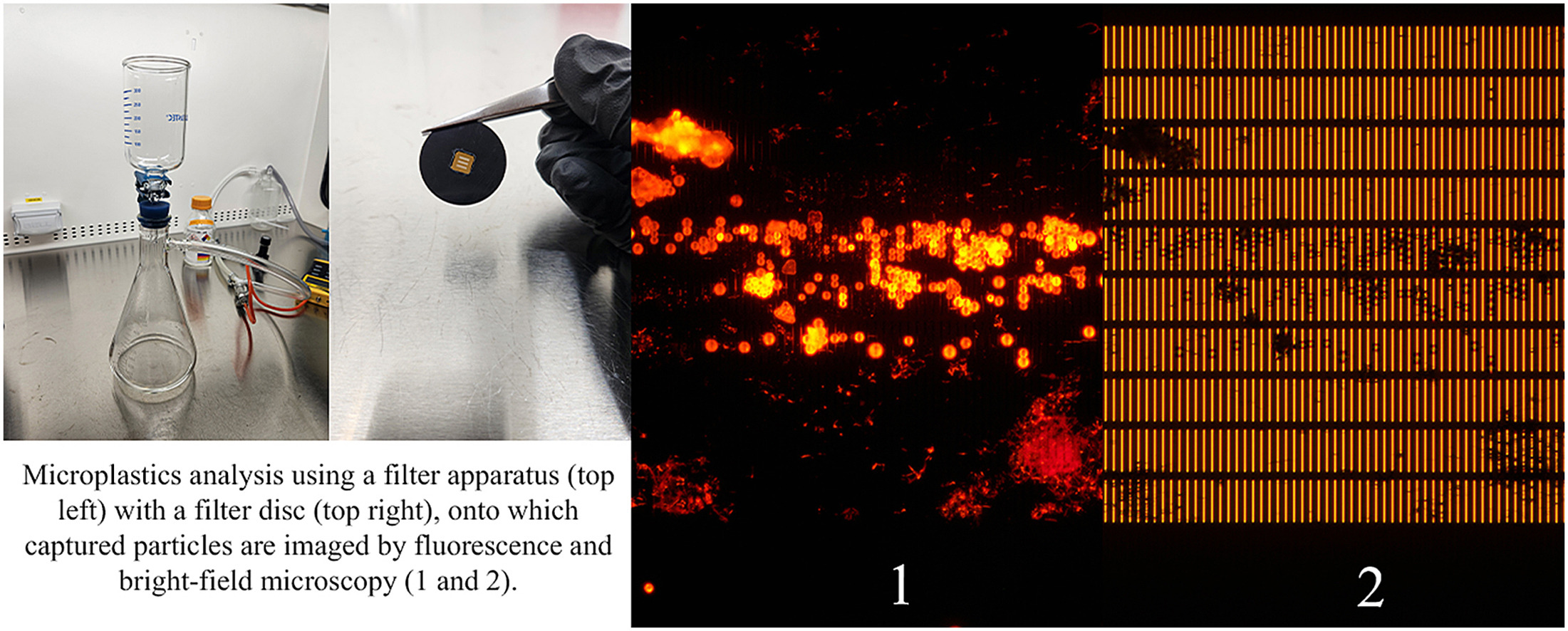
Comparative Evaluation of Filtration and Imaging Properties of Filter Membranes for Microplastic Capture and Analysis
A poster created by SiMPore and Parverio related to joint work performed evaluating the filtration and imaging properties of filter membranes.